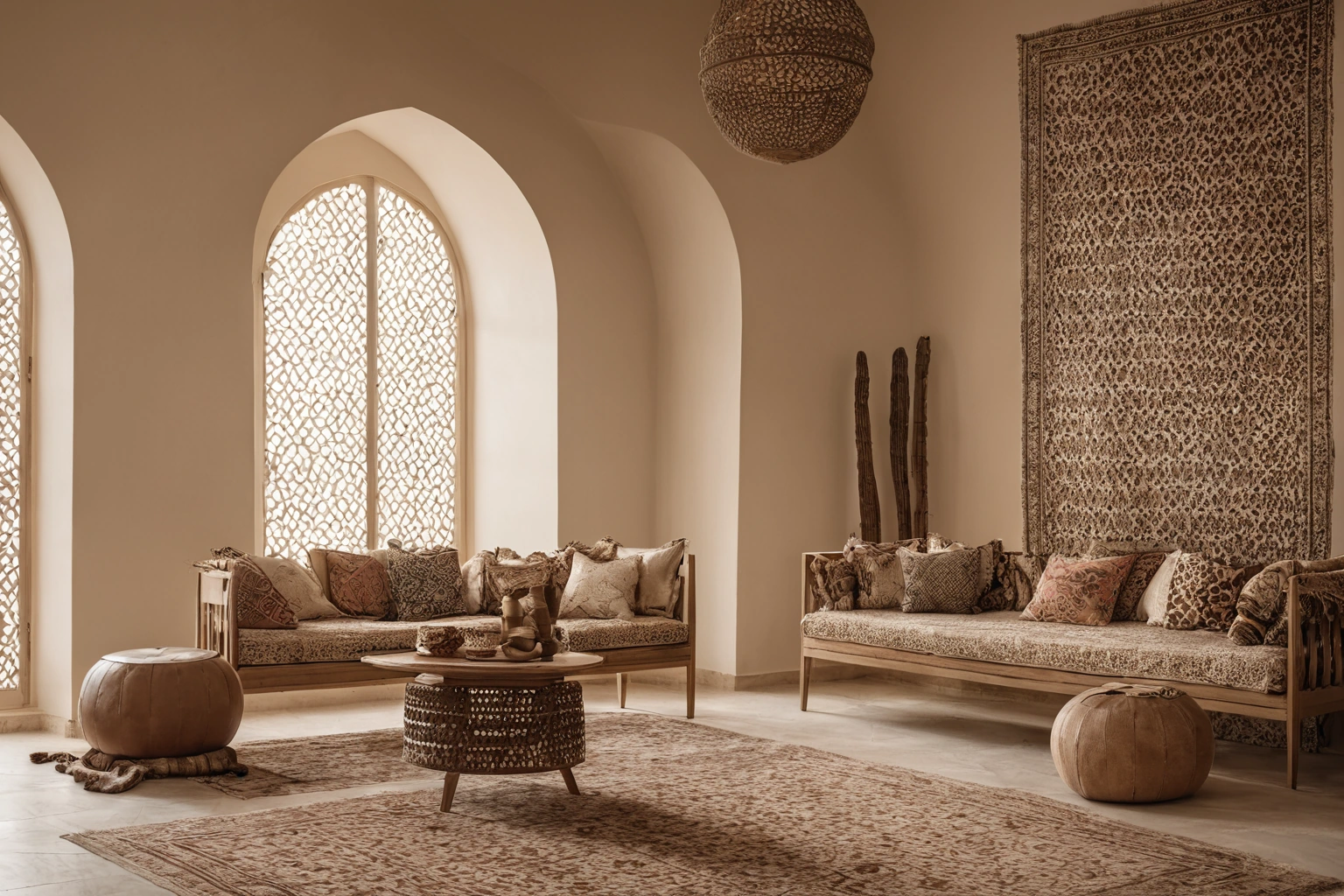
Sarelli Textiles presents fabrics and rugs for interior projects. Geometric textiles can connect furnishings to an interior’s architectural rhythm: a screen, tile grid, arched opening or repeated joinery detail. Study the actual room and textile instead of treating “Arabic pattern” as a single style.
Study the pattern’s source and setting
The Metropolitan Museum of Art’s teaching unit on geometric design in Islamic art describes geometry across architectural and decorative surfaces. Its collection spans many places and periods, so a star, polygon or interlace should not be assigned a vague universal origin. A contemporary project can reference a pattern without claiming to reproduce a specific tradition. If provenance matters, name the collection object, region and date that inform the design rather than attaching a broad cultural label to an unrelated print.
The museum’s educational publication shows geometric patterns used across textiles, ceramics, metalwork, architecture and manuscripts. That cross-material history suggests a practical approach: look for a relationship between the textile’s structure and one existing line in the room. A rug might echo a floor grid; a cushion may repeat a smaller proportion of a screen; a curtain can carry a quieter border that allows the architecture to remain primary.
Choose a hierarchy of lines
Geometric pattern can be dense because it repeats in several directions at once. A room with patterned tile, carved wood and a patterned ceiling already has a strong visual field. Adding an equally active textile everywhere may flatten the hierarchy. Pick the surface that should lead. If the floor is the main statement, use a quieter curtain and let the rug border relate to the tile without copying it. If the architecture is restrained, a textile can take a stronger role.
Compare line weight, not just motif. Thick dark outlines in a rug will read from the doorway; fine tone-on-tone lines may emerge only from the seating area. A pattern that looks precise on a small swatch may become much more assertive across a broad curtain or large carpet. Lay out a full repeat or a scaled drawing on the floor plan. Mark where furniture will cover the pattern so the remaining visible geometry still feels intentional.
Work from scale to material
Architecture is viewed at room distance, upholstery at hand distance, and a rug from both. A single geometric idea can be interpreted at different scales without repeating the same print. For example, a large rug can establish an ordered field while cushions use a small border and curtains remain plain. This creates a conversation between materials. It also avoids making the room look like a catalog set in which every surface carries the same motif.
Material changes the line. A woven pattern may have a softer edge than a print. Pile can make a line dark from one direction and pale from another. A metallic thread can catch a narrow beam of light. Sample the textile in the actual orientation and light. The U.S. Department of Energy distinguishes the color of the light source from the way it renders object colors in its LED guidance. That distinction is especially useful when the pattern depends on a small contrast between ground and motif.
| Room element | What to compare | Possible textile response |
|---|---|---|
| Tile grid | Scale and dominant direction | Related rug border, quieter center |
| Carved screen | Density and silhouette | Plain drape with small repeated detail |
| Arched opening | Curve and sightline | Soft textile field with measured edge |
| Joinery rhythm | Panel intervals | Pattern placement that respects furniture widths |
Keep historical reference specific
A collection object is useful because it can be described accurately. The Met’s record of a garment portion with geometric patterns identifies the object and its decorative components. A present-day room need not reproduce that garment. Instead, the record reminds the designer to distinguish geometry from its surrounding inscriptions, vegetal forms and use context. Removing a motif from its setting can change its meaning. If a design uses a particular historic reference, review it with appropriate cultural knowledge and document the intended connection.
For a project in the UAE or elsewhere in the Arab world, the client’s own architectural and cultural context should guide choices. A generic star pattern may be less meaningful than a measured response to the home’s existing woodwork, light and circulation. Ask what the residents want emphasized and what they consider overused. Treating a motif as decoration alone can miss the reason it appears in the room. The interior brief should describe actual surfaces and desired atmosphere, not rely on an umbrella label.
Test the repeat on the intended object
A geometric pattern is particularly sensitive to cropping. A centered motif can look balanced on one chair back and cut off on the next. On a long sofa, a repeated line may appear to tilt if the fabric has skew or if the upholstery is pulled unevenly. On curtains, the fold can hide one part of the repeat and exaggerate another. The Association for Contract Textiles defines pattern repeat and discusses bow and skew in its quality guidance. Ask the workroom to show a cutting plan for visible pieces before production.
Place the sample on a mock-up or mark a full repeat on paper at the object’s size. Check where seams, piping and furniture edges divide the geometry. An uninterrupted rug border may be useful, but a table leg may obscure its corner; a continuous curtain stripe may appear broken by pleats. Adjust the material placement or select a less dependent pattern. The goal is a pleasing installed view, not perfect geometry on an unused roll.
Specify the room, then the fabric
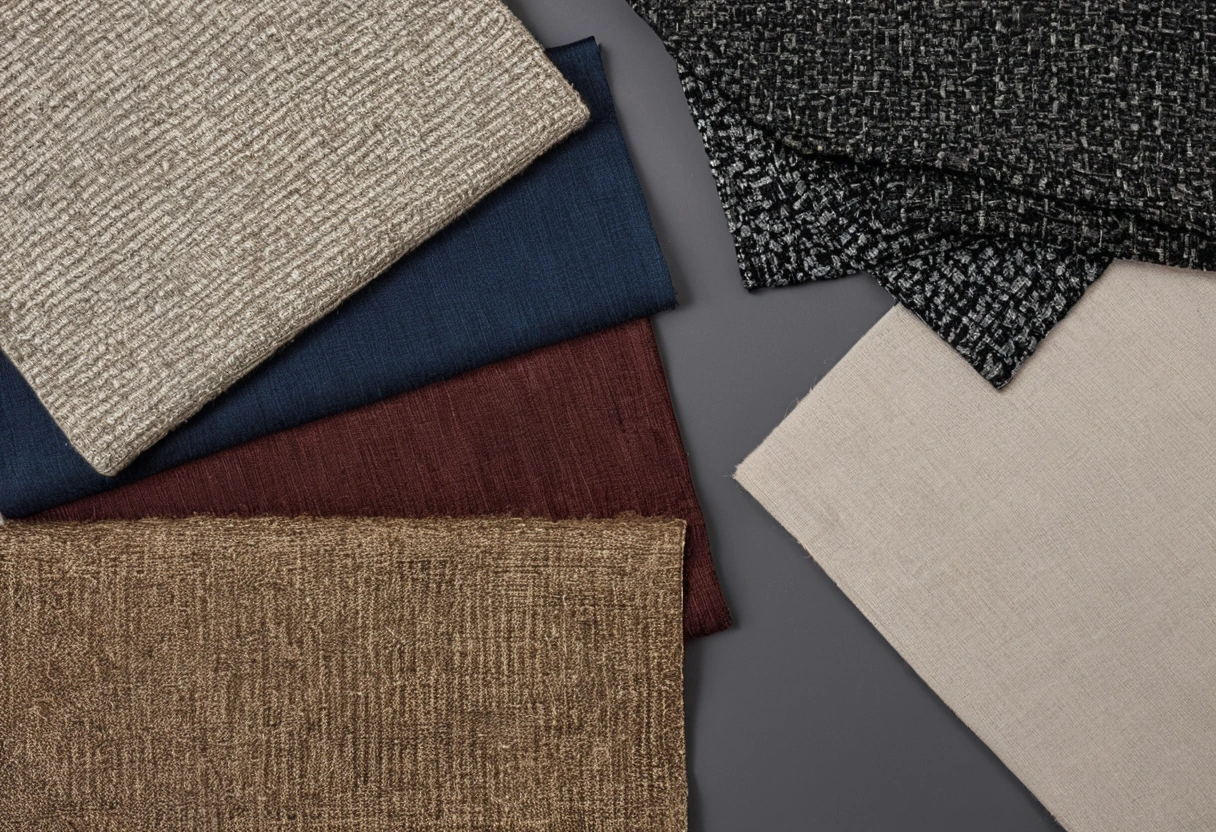
Once the composition is clear, check the practical application. A decorative curtain, an upholstered seat and a rug each face different wear and care conditions. ACT’s voluntary performance framework separates application and construction. Request the specific product information for the intended use rather than assuming that a visually related textile works everywhere. Confirm usable width, repeat direction, seam matching and care instructions with the maker.
The strongest geometric interior does not need geometry on every surface. It needs a readable relationship between architectural order and textile scale. Give one material the lead, allow quieter surfaces to support it, and judge the whole room from the positions where people will actually see it. That approach respects the richness of geometric traditions while keeping the present interior specific to its people, place and construction.
Color can tie an abstract geometric idea to a particular room. Start with the fixed surfaces, then choose whether the textile repeats one of their tones or creates a clearly separate field. A strong outline can make a pattern legible from afar, while adjacent tones let it emerge slowly as a person approaches. Test both effects from the main circulation route. If the room has a striking carved screen, its shadow may already create enough geometry; a plainer textile can let that changing pattern remain visible. This is a response to the room rather than an attempt to fill every surface.
For rugs, check whether the border remains visible around the furniture. For upholstery, check whether a central motif survives seam placement. For curtains, check how pleats interrupt the repeat. Draw each textile at the size and orientation it will actually have before approving the final pattern.
Before procurement, identify the exact point where the textile meets a fixed material. A rug edge beside tile, a curtain beside carved timber or a cushion against stone will be judged in that junction. Sample the junction at full size and in changing light.